


How to Build a Skincare Routine: A Beginner's Guide (2026)
A good skincare routine means choosing the right products and applying them in a consistent order. By the end of this guide, you'll have a solid morning and evening routine ready to go. You'll need to know your skin type, pick 3–5 core products, and spend 5–10 minutes daily. Most people notice visible changes within 4–6 weeks of sticking with it.
Key takeaways:
- Start with a cleanser, moisturizer, and sunscreen; add targeted treatments based on your skin's needs
- Introduce new products one at a time, waiting 1–2 weeks between additions to monitor for reactions
- Morning and evening routines differ; evenings allow for active ingredients like retinoids or acids
- Consistency matters more than complexity; a simple routine you'll stick to beats an elaborate one you'll abandon
- Natural and cruelty-free options exist at every price point, including affordable ranges
What you need before you start
Starting a skincare routine takes more than just buying products. You need to understand your skin, gather some basic information, and set realistic expectations. Getting this foundation right means you'll choose products that actually suit your skin and lifestyle.
Identify your skin type and concerns
Your skin type — how much oil your skin naturally produces — is different from your skin concerns, which are specific issues like acne, sensitivity, or dryness. You might have oily skin with sensitive patches, or combination skin that dries out in winter. Spend one to two weeks watching your skin without introducing anything new. Notice where it feels tight, where it gets shiny, and how it reacts to weather. This observation period is important before you start choosing products. Common patterns to look for:
- Oily skin: feels greasy by midday, has visible pores, and may be prone to breakouts
- Dry skin: feels tight or uncomfortable, may flake, and tightens after cleansing
- Combination skin: oily in the T-zone (forehead, nose, chin) but normal or dry elsewhere
- Sensitive skin: reacts quickly to products with redness, stinging, or irritation
Know what ingredients work for your skin
Different ingredients suit different skin types. Someone dealing with acne will need different actives than someone with sensitivity. Before buying anything, research which ingredients target your specific concerns — for example, niacinamide for oily skin or ceramides for dry skin. Also note which ingredients have caused problems before, such as fragrance or certain acids. Finally, think about texture: do you prefer lightweight gels, rich creams, or something in between? Having a short list of priorities and things to avoid saves you from wasting money on products that won't work.
Have a realistic budget in mind
Skincare does not require expensive products. Affordable options work just as well as premium ones when you choose the right ingredients. Set a monthly budget before you start shopping. This keeps you focused on the essentials rather than filling your bathroom with things you don't need.
Commit to a patch test period
Before putting any new product on your face, do a patch test. Apply a small amount to a hidden area — behind your ear or on your jawline — and wait three to seven days. This simple step can prevent a full-face reaction. It takes patience, but it's a non-negotiable habit when building a safe routine.
Step 1: Identify your skin type and concerns
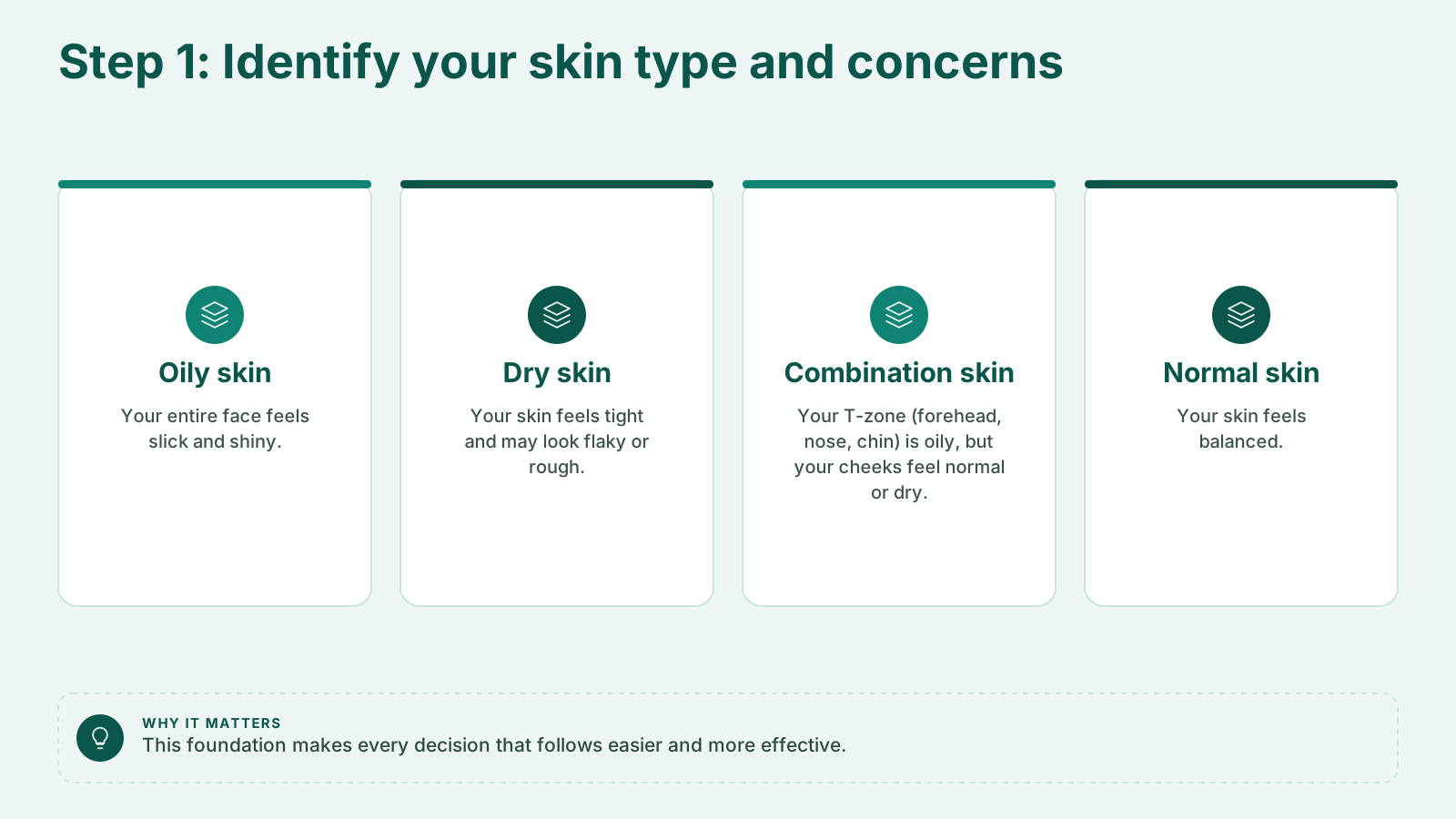
Before you buy a single product, you need to understand your skin. Skin type — the amount of oil your skin naturally produces — shapes which ingredients will help and which might irritate. Your concerns, such as acne, sensitivity, or dullness, tell you what problems to target. Without this knowledge, you risk spending money on products that do nothing for you.
Determine your skin type
The five main skin types are normal, oily, dry, combination, and sensitive. To figure out yours, wash your face with a gentle cleanser and pat it dry. Wait two hours without applying anything. Then look at your skin in natural light. Here's what each type looks like:
- Oily skin: Your whole face feels slick and shiny. Pores look enlarged, especially on your nose and forehead. The priority is controlling excess oil production.
- Dry skin: Your skin feels tight and may look flaky or rough. Pores are barely visible. Fine lines may appear more noticeable. Hydration is the main focus.
- Combination skin: Your T-zone is oily, but your cheeks feel normal or dry. This is the most common type. You'll need to balance different needs in different areas.
- Normal skin: Your skin feels balanced — not too oily or too dry. Pores are small and not prominent.
- Sensitive skin: Your skin reacts easily to products, weather, or stress. You may notice redness, burning, or itching. Gentle, minimal formulas work best.
List your specific skin concerns
Skin type and skin concerns are not the same thing. You can have oily skin with acne, or dry skin with redness. Write down every issue that bothers you and be specific. "My skin feels bad" is too vague. "I have breakouts on my jawline and oily patches on my nose" gives you something to act on.
| Common Skin Concern | What It Looks Like | What to Look For in Products |
|---|---|---|
| Acne | Pimples, blackheads, whiteheads, or cysts | Salicylic acid, benzoyl peroxide, or niacinamide |
| Sensitivity or redness | Burning, itching, or persistent pink tone | Centella asiatica, ceramides, or azelaic acid |
| Dryness or dehydration | Flaking, tightness, or rough patches | Glycerin, hyaluronic acid, or peptides |
| Oiliness | Shiny appearance, clogged pores | Niacinamide, salicylic acid, or clay |
| Uneven texture | Bumpy surface, enlarged pores | Exfoliating acids, retinol, or vitamin C |
Consider your lifestyle and budget
Being realistic about what you'll actually use matters. A ten-step routine sounds thorough, but it's useless if you won't stick to it. Think about how much time you have each morning and evening. Decide whether you prefer a natural skincare routine with minimal ingredients or whether you're open to active treatment products. Budget matters too — an affordable routine can be highly effective. By the end of this step, you should have a clear picture of your skin type, your top three to five concerns, and a realistic sense of what you'll actually maintain.
Step 2: Select products for your morning and evening routine
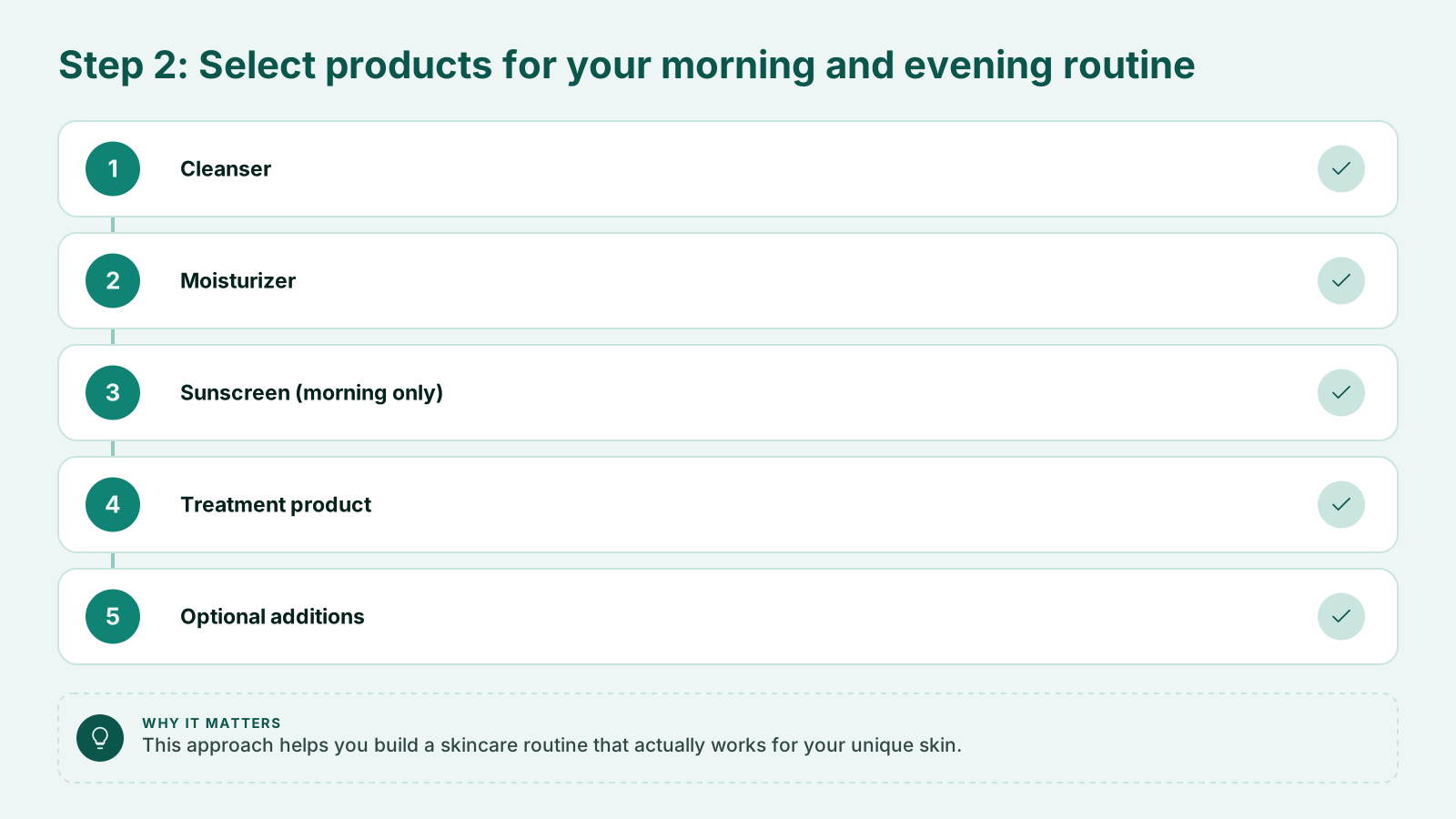
Once you know your skin type, the next step is choosing the right products for each time of day. Morning and evening routines serve different purposes. Your morning routine prepares skin for the day and shields it from environmental stress. Your evening routine clears away the day's buildup and supports repair while you sleep. Picking products that match these distinct goals makes a real difference.
Understanding your morning routine priorities
Morning products should be lightweight and gentle. Your skin is fresh after sleep, and the goal is to cleanse, hydrate, protect, and prep for makeup or sun exposure. A simple morning sequence works well for most people: cleanser, toner or essence (optional), moisturizer, and sunscreen. If you're just starting out, stick to these core steps before adding anything extra.
Your specific skin needs shape which products you pick. Oily skin does well with a gel or foam cleanser and a lightweight, oil-free moisturizer. Dry skin benefits from a creamy cleanser and a richer hydrating formula. Sunscreen — a product that blocks ultraviolet rays — is essential for everyone in the morning, regardless of skin type.
Building your evening routine for repair
Evening routines can be a bit more involved. Your skin isn't facing immediate environmental stress, so this is the right time to address concerns like acne, signs of aging, or sensitivity. A typical evening sequence includes a cleanser, treatment products such as serums, a moisturizer, and sometimes an eye cream.
For acne-prone skin, your evening routine might include a salicylic acid cleanser or a targeted spot treatment. For sensitive skin, soothing ingredients like centella asiatica or niacinamide work well at night. If you have combination skin, you can apply stronger actives only to the areas that need them.
Product selection checklist
- Cleanser: Choose one suited to your skin type and use it morning and evening. A gentle formula avoids stripping natural oils.
- Moisturizer: Pick a lighter formula for mornings and a richer one for evenings that addresses your skin's deeper needs.
- Sunscreen (morning only): Use a broad-spectrum product with at least SPF 30 every day, even indoors.
- Treatment product: Add one targeted solution to your evening routine — such as a vitamin C serum, a retinol alternative, or an acne treatment.
- Optional additions: Eye cream, essence, or masks can improve results but aren't required when you're just getting started.
When selecting products, read ingredient lists carefully and patch-test new items on a small area before applying them to your whole face.
Step 3: Apply products in the correct order
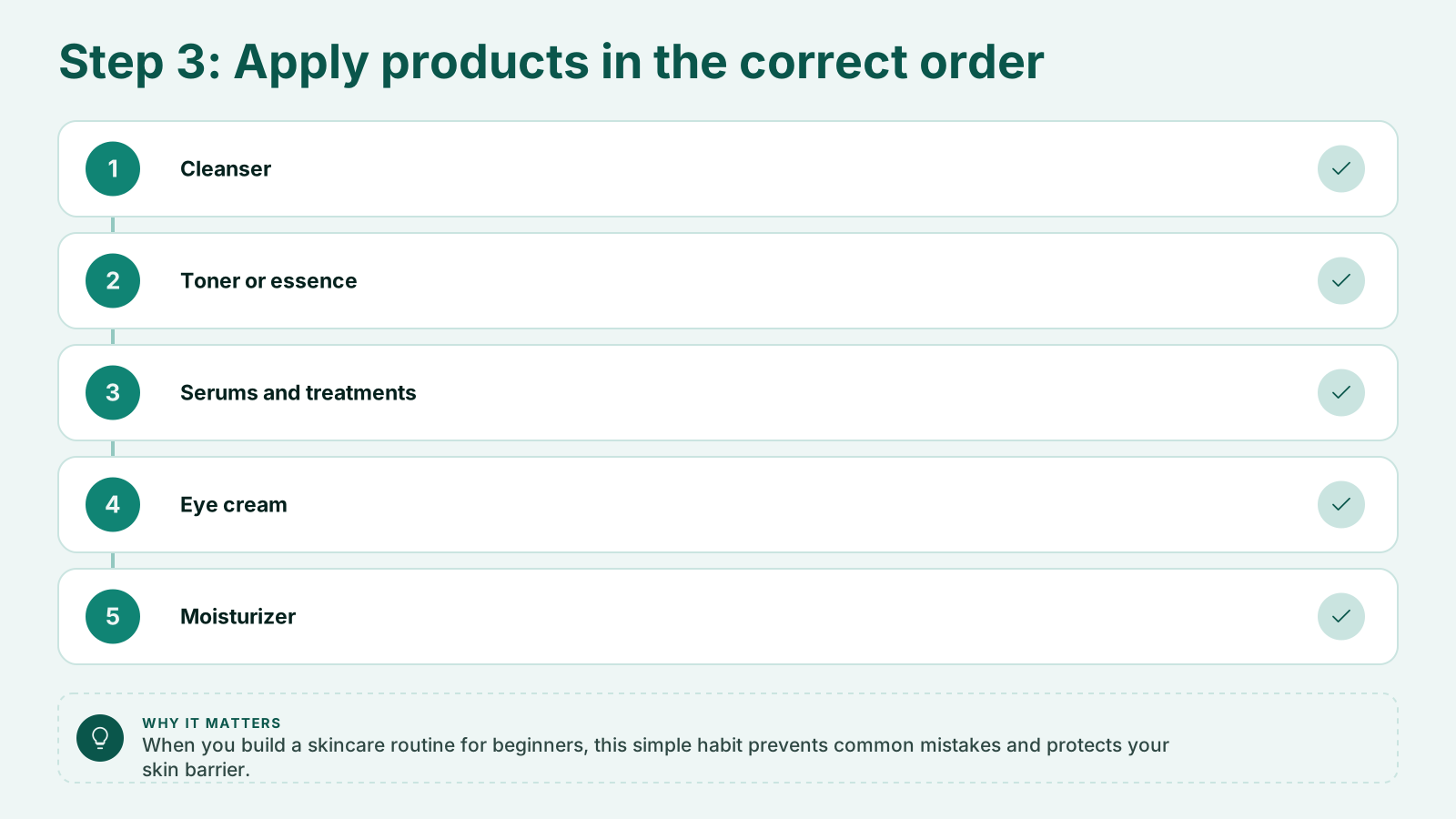
Why application order matters
The order you apply products affects how well each one works. Molecular weight — how heavy or light a formula is — determines absorption. Lighter formulas sink into skin more easily. Heavier ones sit on top and seal things in. If you apply them in the wrong order, heavier products can block lighter ones from reaching your skin. That wastes money and reduces results.
The general rule: lightest to heaviest
Apply products from thinnest to thickest consistency. Think of it like layering clothes — you wouldn't put a coat on under a t-shirt. Start with water-based products and finish with oil-based ones. This lets each layer absorb before the next one goes on.
Standard application order for morning and evening
- Cleanser: Remove dirt, oil, and dead skin cells. Use a gentle formula suited to your skin type and rinse with lukewarm water.
- Toner or essence: These water-based products hydrate and help skin absorb treatments. They're especially useful for sensitive skin types.
- Serums and treatments: Apply active ingredients — substances that create visible changes — like vitamin C, niacinamide, or hyaluronic acid. These work best on clean, slightly damp skin.
- Eye cream: The skin around your eyes is thinner and more delicate. Pat — don't rub — a small amount around the orbital bone.
- Moisturizer: Lock in hydration. Use a lightweight lotion or gel for oily skin, or a richer cream for dry skin. Combination skin may need different formulas on different areas.
- Sunscreen (morning only): Apply a broad-spectrum SPF 30 or higher as your final morning step. Wait two minutes before touching your face or applying makeup.
- Face oil or occlusive (evening only): If your routine includes oils, apply them last at night to seal in moisture. Skip this step in the morning under sunscreen.
Tips for layering success
Wait 30 to 60 seconds between layers so each product can absorb. Don't rush this — patience costs nothing and gets better results. Use only a pea-sized amount of each product. More product doesn't mean better results; it can actually overwhelm your skin and cause irritation. Pat products gently into your skin rather than rubbing. Rubbing can cause irritation and reduce how well products absorb.
How to check it worked

A good routine delivers measurable changes over time. Success doesn't mean perfect skin overnight — it means your skin responds well to the products and habits you've chosen. Knowing what to look for helps you decide whether to stay the course or make adjustments.
Track your skin's condition over four to eight weeks
Most skin cells turn over roughly every 28 days, so meaningful changes take at least a month to appear. Take baseline photos of your face in natural light before you start. Repeat every two weeks under the same lighting. This visual record captures changes you might miss day to day. Compare early photos to recent ones and look for shifts in texture, redness, or overall clarity.
Assess these specific improvements
- Skin texture: Your skin should feel smoother. Rough patches should diminish. Dry skin should flake less. Oily skin should feel less slick by midday.
- Hydration level: Skin should look plumper and less dull. Fine lines appear less obvious when skin is well-hydrated. Makeup also applies more smoothly.
- Breakouts and irritation: Active pimples should heal faster. New breakouts should appear less often. Redness and inflammation should calm down. This metric matters most for acne-prone and sensitive skin types.
- Tone consistency: Dark spots or uneven coloring should gradually fade. Your overall tone should look more even across your face and neck.
- Sensitivity: Your skin should react less to weather, stress, or other triggers. Stinging or burning during application should stop.
Watch for signs your routine needs adjustment
Not every routine works for every person. After four weeks, if your skin hasn't improved — or has gotten worse — something isn't right. Increased breakouts, persistent redness, or new irritation all signal a problem. One product might be too strong, or two products might not work well together. Change only one item every two weeks. That way, you'll know exactly which product caused any improvement or reaction.
Maintain a simple skin diary
Write down what you used each day and how your skin responded. Note any new breakouts, itching, or unusual dryness. Record external factors like stress or sleep quality. These details reveal patterns over time. You'll be able to tell whether a product is causing issues or whether outside factors triggered a reaction — useful information no matter which products you're testing.
Common mistakes and how to fix them
Most people stumble when they first start a skincare routine. Knowing where things go wrong — and how to fix them — saves time, money, and frustration.
Doing too much too fast
The biggest beginner mistake is adding every product at once. Your skin needs time to adjust to new ingredients. When you introduce multiple products at the same time, you won't know which one caused irritation or which one is actually working. Start with the essentials and add one product every one to two weeks. A safe progression looks like this:
- Week 1: cleanser and moisturizer only
- Week 2–3: add sunscreen
- Week 4–5: introduce one active ingredient (like a vitamin C serum or retinoid, which speeds up cell turnover)
- Week 6+: add additional treatments if needed
Skipping sunscreen or using the wrong type
Sunscreen is non-negotiable — it prevents both aging and skin cancer. Many people skip it indoors or on cloudy days, but UV rays penetrate clouds and windows. Use a broad-spectrum sunscreen (one that protects against both UVA and UVB rays) with SPF 30 or higher, every single day. If you have oily skin, choose a mineral sunscreen or a lightweight gel-based formula to avoid clogging pores.
Using products in the wrong order
Order affects absorption. Apply from thinnest to thickest consistency. Water-based serums go on first, then oils, then creams and moisturizers. Sunscreen always comes last in your morning routine. A typical morning order: cleanser → toner (if used) → serum → moisturizer → sunscreen. A typical evening order: cleanser → serum → moisturizer → oil.
Choosing products based on price alone
Expensive doesn't always mean effective, and cheap doesn't mean ineffective. Affordable options can work extremely well. Focus on active ingredients — the components that actually treat your skin — rather than brand name or packaging. Read ingredient lists and match them to your skin type and concerns.
Ignoring your specific skin type
The right routine for combination skin looks very different from one designed for dry or acne-prone skin. Using the wrong products wastes money and can make problems worse. Always identify your skin type first, then select products formulated for it.
Switching products constantly
Results take time. Most active ingredients need four to eight weeks to show visible improvement. If you swap products every week, your skin never gets a chance to respond. Commit to a routine for at least one month before deciding whether it's working.
Frequently Asked Questions
What's the difference between a morning and evening skincare routine?
Morning routines focus on protection and prevention. They typically include a gentle cleanser, lightweight moisturizer, and broad-spectrum sunscreen. Evening routines support skin repair and can include active ingredients like exfoliants or retinoids. These actives can increase sun sensitivity, so they're better suited for nighttime use.
How many products do I actually need to start?
A bare minimum routine includes three products: a cleanser to remove impurities, a moisturizer suited to your skin type, and sunscreen for daytime protection. As your skin settles, you can add targeted treatments like serums or masks. Starting simple also makes it easier to identify which products genuinely help your skin.
How do I know my skin type?
Skin types are generally categorized as oily, dry, combination, or sensitive. Observe how your skin feels 30 minutes after cleansing, with nothing applied. Oily skin feels slick, dry skin feels tight, combination skin shows oiliness in the T-zone with dryness elsewhere, and sensitive skin reacts easily to products or environmental factors.
How long should I wait before adding a new product to my routine?
Introduce one new product every 1–2 weeks and use it consistently before adding another. This waiting period helps you identify whether any irritation or breakouts are caused by the new product, making it easier to troubleshoot and find what works.
Are natural and cruelty-free skincare products effective?
Yes. Natural and cruelty-free products can be highly effective when they contain evidence-backed ingredients. These terms refer to sourcing and ethics, not performance. Effectiveness depends on the specific formulation and how well it matches your skin's needs — not whether it carries a natural or cruelty-free label.
Final thoughts
A good skincare routine rewards patience and consistency. Start with the essentials — cleanser, moisturizer, and sunscreen — and watch how your skin responds over several weeks. Once that foundation feels solid, you can explore natural, cruelty-free, or other options that match your values and address specific concerns. Your next step: identify your skin type today and pick one gentle cleanser to begin.
Powered by AutoSEO — AI SEO content on autopilot.