


How to Build a Skincare Routine for Beginners (2026)
Starting a skincare practice means selecting and layering products that cleanse, treat, and protect your skin based on your type and concerns. By the end of this guide, you'll have a personalized morning and evening routine using 3–5 core products. Identify your skin type and any specific concerns before you begin. A basic routine takes just 5–10 minutes daily to establish.
Key takeaways:
- Start with a cleanser, treatment product (serum or moisturizer), and moisturizer as your foundation
- Layer products from thinnest to thickest consistency for better absorption
- Choose organic and cruelty-free options suited to sensitive skin if that's a concern
- Build gradually—introduce one new product every 1–2 weeks to monitor how your skin responds
- Morning and evening routines differ slightly; evenings allow for richer, more active treatments
What you need before you start
A good skincare practice requires more than just buying products. You need to understand your starting point, gather the right information, and be realistic about what you can commit to. Success depends on knowing your skin, setting reasonable expectations, and having the right tools ready.
Identify your skin type
Your skin type — the natural condition of your skin — determines which products will help and which might cause problems. Skin type is different from skin condition. Type is what you're born with. Condition is temporary and can change based on weather, stress, or the products you use.
To find your type, observe your skin in its natural state. Don't wash your face for several hours first. Then look at your T-zone (forehead, nose, chin) and cheeks. Ask yourself these questions:
- Does your skin feel tight and look dull? You likely have dry skin.
- Does your skin shine, especially in your T-zone? You may have oily skin.
- Are some areas oily and others dry? You probably have combination skin.
- Does your skin feel comfortable but react easily to products? You may have sensitive skin.
Knowing whether you have dry, oily, combination, or sensitive skin is essential. Dry skin needs hydrating ingredients. Oily skin does better with lightweight, non-comedogenic formulas. The right match saves time and money.
Document any skin concerns or conditions
Beyond basic skin type, write down specific issues you want to address. Common concerns include acne, sensitivity, redness, uneven texture, or signs of aging. This list will guide your product choices later. Addressing acne-prone skin, for example, calls for different steps than caring for sensitive skin. Also note any allergies, past reactions, or conditions a dermatologist has diagnosed. If you've had contact dermatitis or rosacea, document what triggered it. This prevents repeated mistakes and helps you choose safer products.
Set realistic expectations about timeline
Skin changes take time. Most products need 4 to 8 weeks of consistent use before you'll see meaningful results. Your skin naturally sheds dead cells every 28 days, so patience matters. Don't expect overnight transformation when you're just getting started.
Commit to consistency and gather basic supplies
A routine only works if you follow it. Be honest about your lifestyle. Can you commit to morning and evening steps? Or do you need something simpler? Many beginners do well with just three steps: cleanse, treat, and moisturize. You can add more later. You'll also need a few simple tools:
- Clean hands or applicators: Always use clean hands, cotton pads, or brushes to prevent bacteria transfer to your face and products.
- A mirror with good lighting: Natural daylight is best for seeing your skin clearly and tracking changes over weeks.
- A journal or notes app: Record which products you use, when you started, and how your skin responds. This becomes invaluable if problems develop.
- Sunscreen: This is non-negotiable. Sun damage makes every other step less effective. You need broad-spectrum protection rated SPF 30 or higher.
Understand ingredient basics
You don't need a chemistry degree, but knowing a few key ingredients helps. Hyaluronic acid is a humectant — it draws water into skin. Ingredients like shea butter seal that hydration in. Actives are ingredients that create visible change, such as vitamin C or niacinamide. If you prefer natural products, you'll find plant-based alternatives to most synthetic ingredients.
Establish a realistic budget
Effective skincare doesn't require expensive products. Budget-friendly options work just as well as luxury ones when you choose the right ingredients. Decide how much you can spend monthly and stick to it. A basic setup needs only a cleanser, moisturizer, and sunscreen. Everything else is optional and can be added gradually.
Step 1: Identify your skin type and concerns
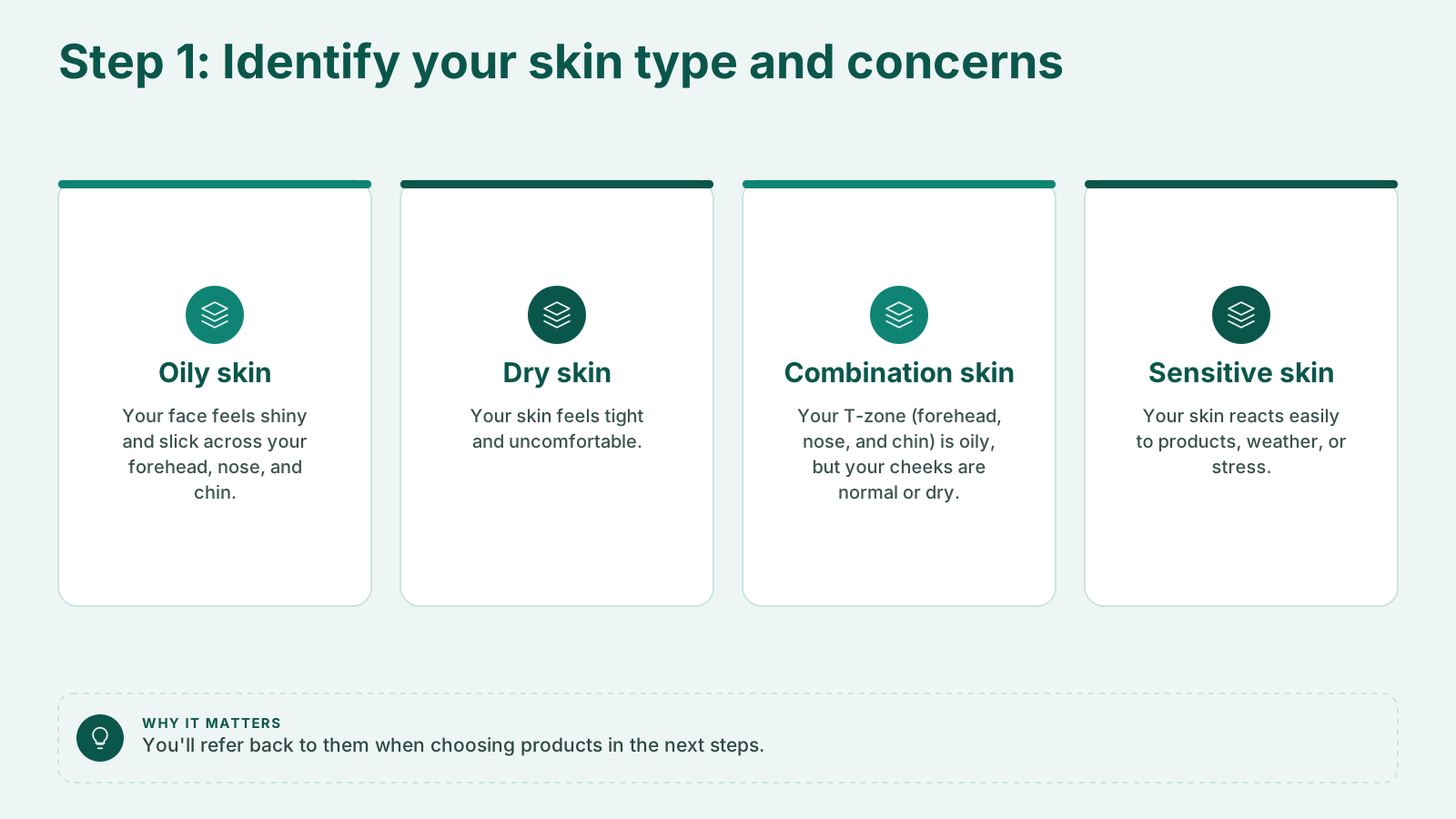
Before you start selecting products, you need to understand what you're working with. Your skin type — oily, dry, combination, or sensitive — determines which formulas will help and which might irritate you. Your skin concerns — acne, sensitivity, aging, or dullness — guide which active ingredients you need. Skipping this step means buying products that don't match your actual needs, which wastes both money and time.
Determine your skin type
The easiest method is the bare-face test. Wash your face with a gentle cleanser (like an organic hyaluronic acid cleanser) and pat dry. Wait two hours without applying anything. Then observe how your skin feels and looks. Does it feel tight and flaky? Does it shine within an hour? Does it vary across different zones? Your answers reveal your type. Here's what to look for across each zone — forehead, nose, cheeks, and chin:
- Oily skin: Feels greasy or shiny, especially in the T-zone. Pores appear larger. Prone to breakouts and blackheads. The focus is on balancing oil production without over-drying.
- Dry skin: Feels tight, rough, or flaky. May have visible dry patches. Absorbs moisturizer quickly. Prone to irritation. The priority is hydration and barrier protection.
- Combination skin: Oily in the T-zone, dry or normal on the cheeks. Requires a balanced approach, sometimes using different products in different areas.
- Sensitive skin: Reacts easily to products, weather, or stress. May feel itchy, tight, or stinging. Prone to redness. The emphasis is on gentle, minimal ingredients.
List your primary skin concerns
Next, write down what bothers you most about your skin. Common concerns include acne, fine lines, uneven texture, redness, dryness, or dullness. Prioritize the top two or three. If you're starting from scratch, focus on your biggest issue first. Adding too many targeted treatments at once overwhelms your skin and makes it hard to know what's actually working.
For example, acne-prone skin benefits from gentle cleansing and a lightweight moisturizer before you add any active treatment. If aging is your main concern, an anti-ageing hyaluronic acid facial serum addresses both hydration and fine lines. If sensitivity is the issue, choose products labeled cruelty-free and formulated for reactive skin to minimize flare-ups.
Reference this comparison of skin types
| Skin Type | How It Feels | Common Concerns | Routine Priority |
|---|---|---|---|
| Oily | Shiny, greasy, especially mid-face | Acne, large pores, blackheads | Lightweight hydration, pore control |
| Dry | Tight, flaky, uncomfortable | Sensitivity, irritation, dullness | Deep hydration, barrier repair |
| Combination | Oily T-zone, dry or normal cheeks | Uneven texture, patchy dryness | Balanced hydration, zone-specific care |
| Sensitive | Reactive, easily irritated | Redness, stinging, itching | Minimal, gentle, calming ingredients |
What you should see at the end of Step 1
By now, you should have written answers to three questions: What is my skin type? What are my top two or three concerns? Which products should I avoid? This clarity prevents impulse purchases and guides every choice going forward. Whether you're exploring affordable options, products from The Ordinary, or premium organic formulas, knowing your type and concerns keeps you focused and saves money. You're ready to move on: choosing the core products that every routine needs.
Step 2: Choose products suited to your skin's needs
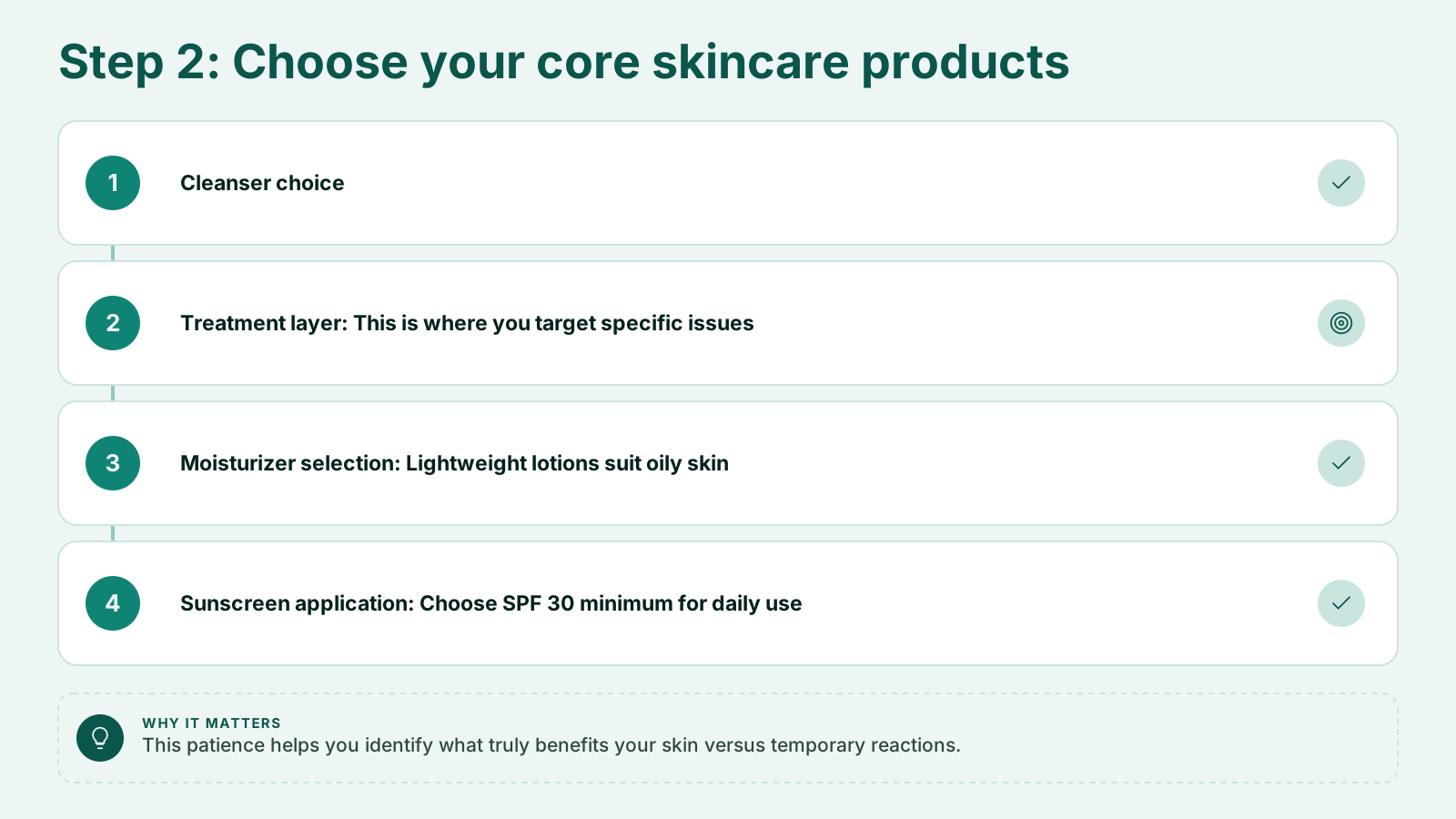
Selecting the right products means matching formulas to your skin type and concerns. Not all products work for everyone. What helps one person may irritate another. The goal is to find formulations that support your skin's unique characteristics.
Match your skin type to the right textures
Start by confirming whether your skin is dry, oily, combination, or sensitive. Dry skin often feels tight and may show flaking. Oily skin produces excess sebum and appears shiny. Combination skin is oily in some areas — typically the forehead, nose, and chin — while dry elsewhere. Sensitive skin reacts easily to products, environmental factors, or certain ingredients.
Your skin type points you toward the right textures and formulas. Oily skin benefits from lightweight, water-based products. Dry skin needs richer moisturizers with nourishing ingredients. Combination skin may need different products for different zones. Getting this right from the start prevents wasted spending and unnecessary irritation.
Assess your skin concerns
Beyond skin type, identify the specific issues you want to address. These might include acne, sensitivity, uneven texture, or signs of aging. Breakout-prone skin needs targeted ingredients like niacinamide or salicylic acid. Sensitive skin calls for gentle, minimal formulations. Write down two or three main concerns. This keeps you focused when shopping and stops you from buying products that don't serve your goals.
Select core products in the right order
A basic routine includes four essential steps. You can expand from there, but these form the foundation.
- Cleanser: Removes dirt, oil, and makeup. Choose a gentle formula that doesn't strip your skin. An organic cleanser works well for those seeking natural ingredients without harsh chemicals.
- Treatment serum or essence: Delivers concentrated active ingredients. Serums with hyaluronic acid hydrate and plump skin. Others target specific concerns like aging or sensitivity.
- Moisturizer: Seals hydration and protects your skin barrier. Look for ingredients like shea butter or plant oils if you prefer natural options. Choose lightweight formulas for oily skin and richer textures for dry skin.
- Sunscreen: Protects against UV damage during the day. Use it every single day, even indoors.
Match ingredients to your needs
Once you know your type and concerns, look for products with proven ingredients. For sensitive skin, seek cruelty-free beauty products with minimal, recognizable ingredients. For aging concerns, look for serums with peptides or vitamin C. For acne, consider niacinamide or salicylic acid. If you're working with a tight budget, starting with one or two quality products often matters more than buying a full ten-step lineup. A good cleanser and moisturizer are usually the best place to begin.
Step 3: Apply products in the correct order
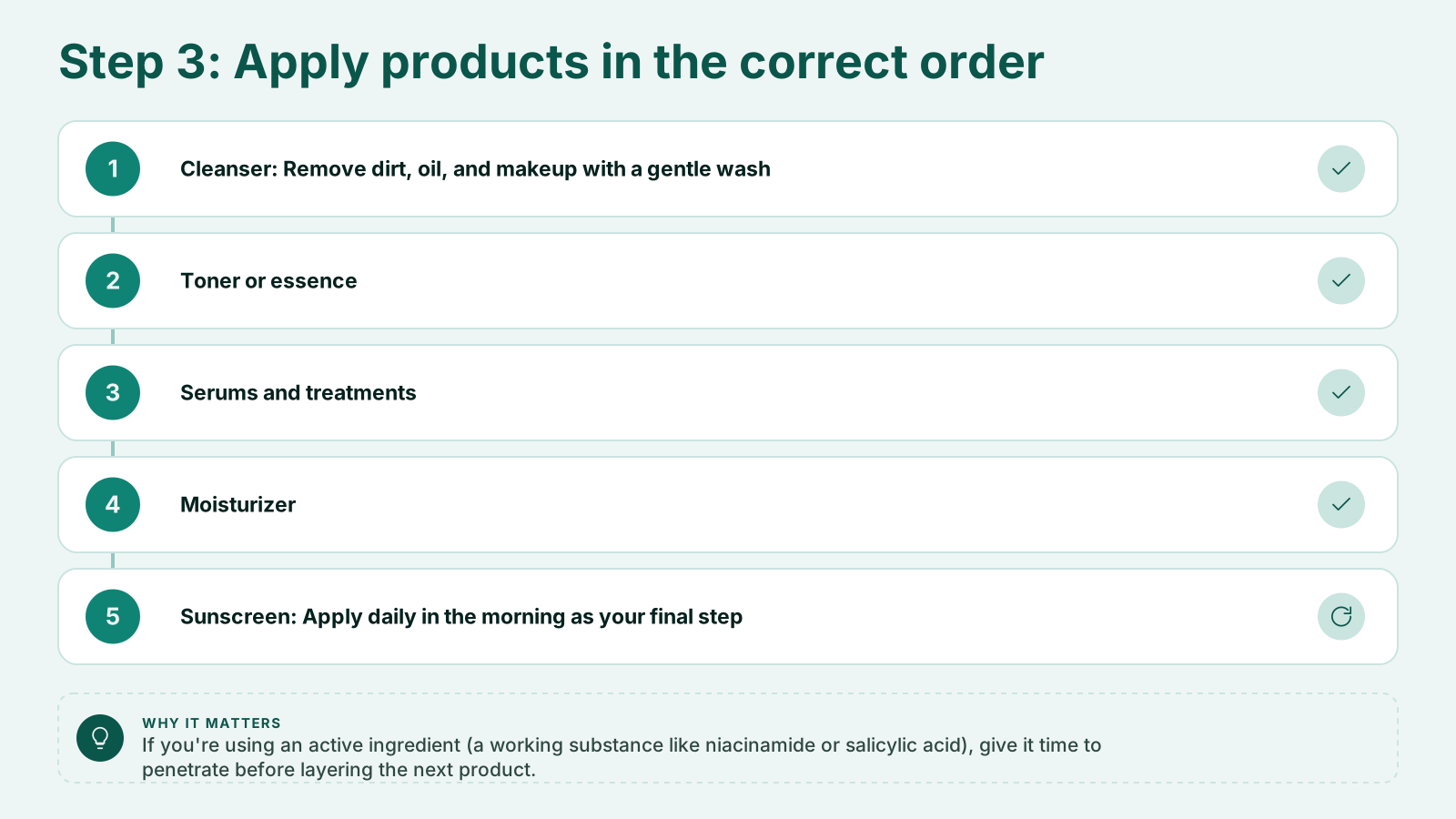
Why order matters
The sequence in which you apply products directly affects how well they work. Texture and molecular weight — how heavy or light a product feels — determine absorption rates. Lightweight products penetrate skin more easily than thick ones. Applying them in the wrong order creates a barrier that blocks active ingredients from reaching deeper layers. This wastes money and reduces results, regardless of your skin type.
The golden rule: lightest to heaviest
Apply thinner, water-based products first, then move to richer, oil-based formulas. This lets each layer absorb fully before the next one goes on. Think of it like building a house — you start with the foundation, not the roof. This principle applies whether your skin is dry, oily, or sensitive.
Your morning and evening order
Morning routine typically follows this sequence:
- Cleanser: Start with a gentle, water-soluble cleanser like an Organic Hyaluronic Acid Cleanser to remove overnight buildup and prepare skin for other products.
- Toner or essence: These lightweight, hydrating liquids prep skin and balance pH levels, making it easier for serums to absorb.
- Serum: Apply an active serum such as an Anti-Ageing Hyaluronic Acid Facial Serum while skin is still slightly damp. Serums deliver concentrated ingredients deep into skin.
- Moisturizer: Lock in hydration with a lightweight or medium moisturizer. Choose a Sea Buckthorn Facial Moisturizer or similar formula suited to your skin type.
- Sunscreen: Always finish with broad-spectrum SPF 30 or higher. This is non-negotiable for daytime protection.
Evening routine follows a similar pattern but allows for richer textures:
- Cleanser: Remove makeup and daily grime with your chosen cleanser.
- Toner or essence: Hydrate and balance as in the morning routine.
- Serum: Apply your active serum to clean, damp skin.
- Moisturizer or night cream: Use a heavier formula at night since you won't be applying sunscreen. Your skin repairs itself during sleep, so richer products work well here.
Special considerations
If you have sensitive skin, skip harsh actives and stick to soothing, hydrating products. Never layer multiple active serums at once. Wait 30 seconds between each product to allow absorption. This simple pause prevents pilling, where products ball up on your skin instead of absorbing. Remember: three well-applied products beat ten poorly layered ones every time.
How to check it worked

Results don't appear overnight. Most people need 4 to 12 weeks to notice real changes in their skin. Track your progress carefully so you know whether your routine is working or needs adjustment.
Observe your skin's baseline and changes
Before you start, take a clear photo of your face in natural daylight. Repeat this once a week at the same time of day. Compare photos month to month. This visual record shows what's really happening — not just what you feel or imagine. Look for improvements in texture (smoothness), tone (fading redness or dark spots), and hydration (plumpness versus dullness).
Pay attention to the specific concerns you wanted to address. If you set up a routine for dry skin, your goal is less flaking and tightness. For oily skin, you're looking for less shine by midday. For acne-prone skin, you want fewer breakouts and faster healing of existing blemishes.
Check for these concrete signs of success
- Reduced irritation: Your skin should feel calm. Redness, stinging, or burning should decrease week by week. If irritation gets worse after two weeks, stop and simplify.
- Better texture: Run your fingertips across your cheek and forehead. Healthy skin feels smoother. Rough patches should soften. Bumpy texture should flatten.
- Even tone: Dark spots and redness should fade gradually. This takes longer than texture changes — expect 8 to 12 weeks for visible fading.
- Balanced moisture: Your skin should feel neither tight nor greasy. For combination skin especially, this balance is the main goal.
- Fewer breakouts: New pimples should appear less often. Existing ones should heal faster. Healing time dropping from seven days to four days is real progress.
Track your routine consistency
Success depends on actually using your routine. Keep a simple checklist. Mark off each morning and night when you cleanse, apply serum, and moisturize. After four weeks, calculate how often you completed the full routine. Higher consistency means faster, clearer results. Skipping steps or missing days delays progress.
Reassess after six to eight weeks
If you chose organic or natural products, or if you're caring for sensitive skin, give the routine a full two months before deciding it doesn't work. However, if your skin gets worse — more breakouts, persistent redness, or swelling — stop immediately. That's a sign of allergy or incompatibility, not adjustment. After eight weeks, ask yourself: Is my skin clearer, smoother, or more hydrated than before? Do I need fewer spot treatments? Does my skin feel healthier? If the answer is yes to most questions, your routine is working. If not, adjust one product at a time and wait another four weeks before changing anything else.
Common mistakes and how to fix them
Most people stumble not because they choose poor products, but because they rush the process or ignore their skin's actual needs. Here are the errors that derail even well-intentioned routines — and how to correct them.
Skipping the patch test before using new products
Many people apply a new serum or moisturizer to their entire face without testing it first. This risks irritation, redness, or allergic reactions that set back progress by weeks. Instead, apply a small amount to your inner arm or behind your ear 24 hours before using it on your face. Watch for redness, itching, or burning. This single step is especially important for sensitive skin.
Introducing too many products at once
Enthusiasm leads people to overload. If you add a cleanser, toner, serum, and moisturizer in the same week and your skin reacts badly, you won't know which product caused it. Add one product every two weeks instead. This gives your skin time to adjust and lets you identify what actually works. A strong routine has three to five core steps — not ten.
Using the wrong water temperature when cleansing
Hot water feels refreshing but strips your skin's natural oils. Cold water doesn't remove dirt and makeup effectively. Use lukewarm water — comfortably warm to the touch, not hot. This removes impurities without triggering dryness or irritation. Temperature matters more than most people realize, particularly for dry skin types.
Applying products to wet skin inconsistently
Serums and essences work best on slightly damp skin because water helps them penetrate. Moisturizers seal in that hydration most effectively when applied right after. Sunscreen needs completely dry skin to form a protective barrier. Rushing through application without thinking about skin moisture levels wastes product and reduces results.
Neglecting to adjust your routine seasonally
Cold months dry skin out; heat increases oil production. Many people use the same products year-round and wonder why their skin feels off half the year. Swap to a richer moisturizer in winter. In summer, switch to lighter formulas if your skin turns oily. Your routine should evolve with the seasons.
Forgetting sunscreen or applying too little
Sunscreen is the most skipped step in most routines. People either omit it entirely or apply a thin layer that provides minimal protection. Use a quarter-teaspoon for your face — about the size of a pea. Apply it as your final step, waiting two minutes before makeup. Sun damage accelerates aging and causes dark spots. No other product matters if UV exposure undoes your work.
Expecting results in days instead of weeks
Skin cells renew every 28 to 40 days. Judging a routine after three days guarantees disappointment. Give each routine at least four to six weeks before deciding if it works. Document your skin weekly with photos to spot gradual improvements you might otherwise miss.
Frequently Asked Questions
What's the right order to apply skincare products?
Apply products from lightest to heaviest texture: cleanser, toner or essence (if used), serum, eye cream, moisturizer, and finally sunscreen in the morning. This sequence allows each product to absorb fully and work effectively without blocking others.
How do I know my skin type, and why does it matter?
Observe your skin after cleansing: oily skin feels slick, dry skin feels tight, combination skin is oily in the T-zone but dry elsewhere, and sensitive skin reacts easily to products. Your skin type determines which ingredients and product textures will work best and prevent irritation or ineffectiveness.
Can I use the same routine morning and night?
Not entirely. Morning routines should be lightweight and include sunscreen for protection. Evening routines can include richer moisturizers, active serums, and treatment products because your skin repairs itself at night and doesn't need sun protection indoors.
How long does it take to see results from a new skincare routine?
Most skin changes appear after 4–6 weeks of consistent use, though some products like cleansers show immediate effects. Patience is essential; introducing products too quickly can confuse your skin and make it hard to identify what's working.
Should beginners use natural and organic skincare products?
Natural and organic products can be a good starting point, especially for sensitive skin, as they often contain fewer synthetic irritants. Look for cruelty-free, organic-certified options that align with sustainable beauty values while still addressing your specific skin concerns.
Final thoughts
A beginner's approach to skincare doesn't need to be complicated or expensive. Start with the essentials — a gentle cleanser, a treatment serum or moisturizer tailored to your skin type, and a nourishing moisturizer — then adjust based on how your skin responds. Choosing organic, cruelty-free products designed for sensitive skin means caring for both your complexion and your values. Your next step: identify your skin type this week, pick one cleanser to start with, and commit to the routine for at least four weeks before adding anything new. Powered by AutoSEO — AI SEO content on autopilot.